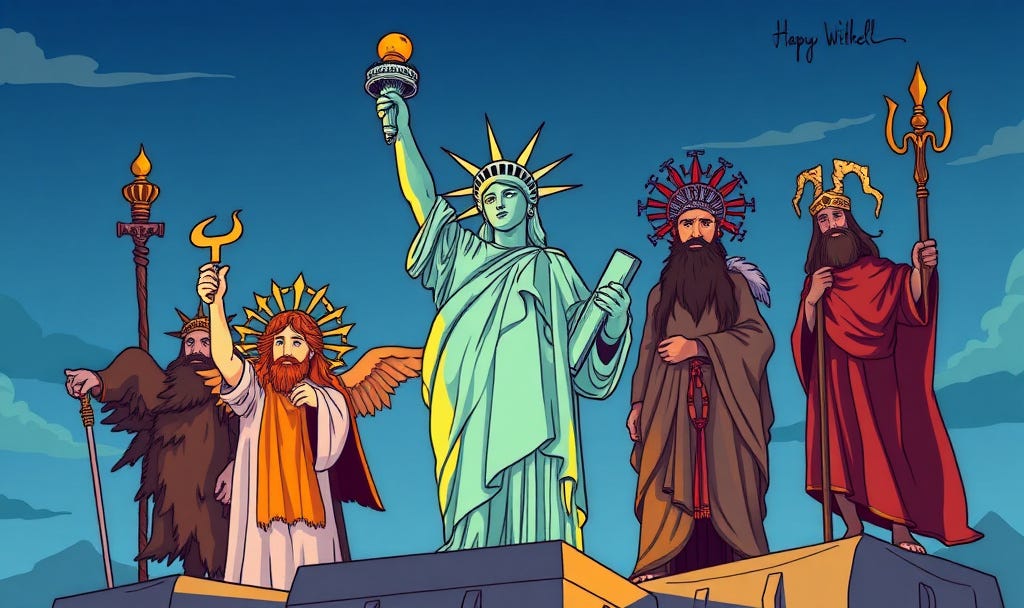
Lady Liberty .... Not So Fast!
That Statue of Liberty is looking more like.....the Statue of Satan!

Only in Satan’s Little Season could this be true. The Statue of Liberty, that beloved Lady Liberty, the one the country was built on…..is satanic in nature? Just look at that mug face. Is that the face of a lady or the one that the occult refers to as Lucifer? She/he looks a lot like the famous 1797 portrait of Lucifer by Sir Thomas Lawrence. The occult often refers to Lucifer as the light bearer, in an effort to mock the true light bearer, Jesus. Is that a light/torch Lady Liberty is bearing?
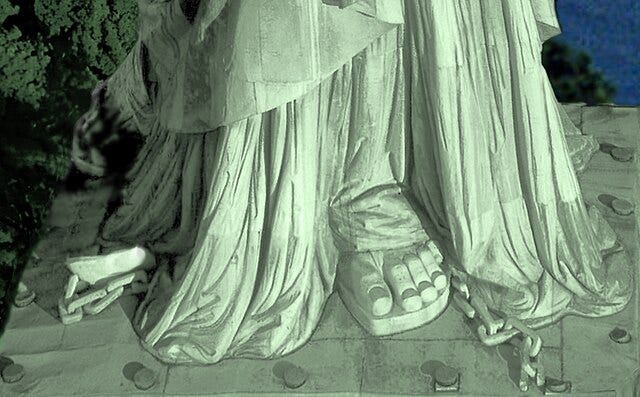
We are told that the broken chain on Lady Liberty’s foot has something to do with escaping oppression. What if the broken chain is symbolic for when Satan was released from the abyss, in order to deceive the nations as described in Revelation 20? The tablet that Lady Liberty is holding is referred to as the Tabula ansata, or a votive tablet. These tablets have connections to rituals, human sacrifices and communicating with other deities. And, nothing says sun worshiping like a crown of seven rays. Did I mention that Nero, a contender for the Antichrist, also had a crown of seven rays on his statue, much like Lady Liberty. At this point it does not look good for Lady Liberty. Are we honoring freedom, or Satan? What does this say about the leadership of our country?
Key Facts & Origins
The Statue was designed by French sculptor Frédéric Auguste Bartholdi and its official title is Liberty Enlightening the World. UNESCO World Heritage Centre+4Encyclopedia Britannica+4National Park Service+4
It was presented as a gift from France to the United States, commemorating the centenary of American independence and shared ideals of liberty. National Park Service+1
The statue stands at about 305 feet (93 m) including its pedestal. Encyclopedia Britannica+1
The figure is a robed woman? holding a torch in her right hand and a tablet inscribed with “JULY IV MDCCLXXVI” (July 4, 1776) on her left. Wikipedia+1
At her feet are broken chains and shackles, symbolizing the breaking of bondage (including slavery) and the idea of freedom. Wikipedia
Some Symbolic/Alternative Notes
Some sources note that one of the intentions behind the design was to celebrate the abolition of slavery in the U.S. (after the Civil War)? National Park Service+1 If this had anything to do with slavery, wouldn’t the statue be one of a slave instead of a sun worshiping goddess thing?
There are claims that the statue’s design drew inspiration from earlier classical, Egyptian or “goddess”-type figures. For example, one article discusses its Egyptian woman origin idea.
The statue’s iconography (woman, torch, crown rays) echoes classical imagery of freedom, light, and enlightenment.
Sol Invictus
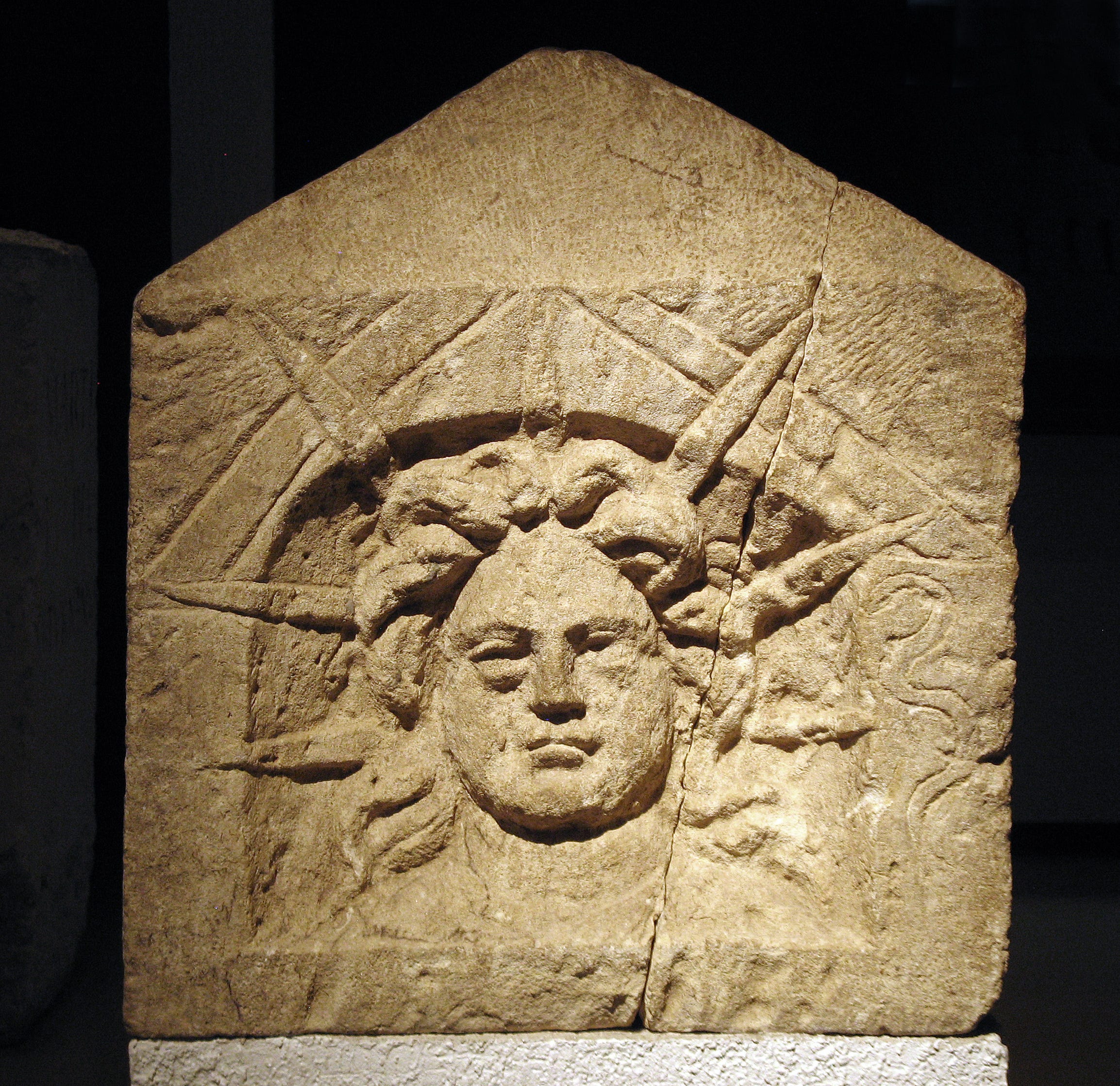
Key Facts & Origins
Sol Invictus means “Unconquered Sun.” He was a sun-god worshiped in the later Roman Empire. Wikipedia+1
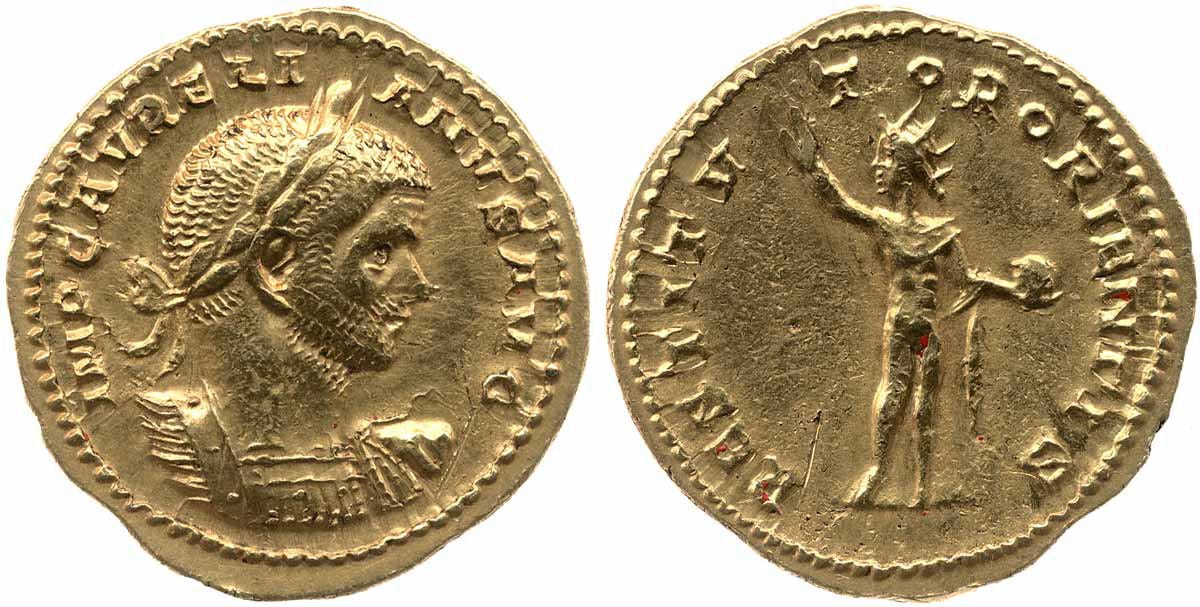
The cult of Sol (or Sol Invictus) was revived by Emperor Aurelian in 274 AD and promoted as a chief deity of the empire. Wikipedia+1
Symbols of Sol Invictus include the radiate crown (rays of the sun), chariot imagery, and coins with the sun-burst motif. Encyclopedia Britannica
Why This Comparison Matters
The Statue of Liberty’s crown has seven rays, which some observers associate with “sun rays” or rays of light, echoing sun-god iconography like Sol or earlier deities.
The idea of “enlightenment,” “liberty,” and “light” are common themes: the sun god brings light, the statue brings light and freedom. This makes me wonder about the entire enlightenment period?
The presence of chains broken at the feet of the statue ties into themes of liberation from bondage, sun gods in many mythologies represent triumph over darkness.
Other Iconographic & Symbolic References
The concept of “Freedom” or “Liberty” personified as a female figure has precedents in classical goddess imagery (e.g., Roman goddess Libertas). The Statue of Liberty is often said to be inspired by Libertas. Wikipedia+1
The broken chain motif: Many statues of “freedom” include broken shackles as a symbol of emancipation. The Statue of Liberty has them at her feet.
The torch: light in darkness is a recurrent symbol in religious and mythological thought of illumination, guidance, enlightenment.
Crown with rays: Similar to sun-cult iconography (e.g., Sol Invictus) and later associations (e.g., halo of saints, rays around divine figures).
Things to Explore & Consider
What does it mean when a national emblem uses classical and mythological imagery (goddess figures, sun rays, broken chains)?
Could the combination of “liberty,” “enlightenment,” “light,” and “freedom from chains” have theological/spiritual resonance (for better or worse)?
When symbols from pagan, classical, or mythic systems are repurposed in modern national iconography, how does that impact the underlying meaning?
The dual-meaning: on one hand, the statue is celebrated as a symbol of freedom and hope; on the other, some critics argue it carries layers of classical/masonic symbolism.
In Satan’s Little Season framework: How might symbols of “light” and “liberty” be used in spiritual deception? Light is good, freedom is good, but the question is: freedom from what, to what?
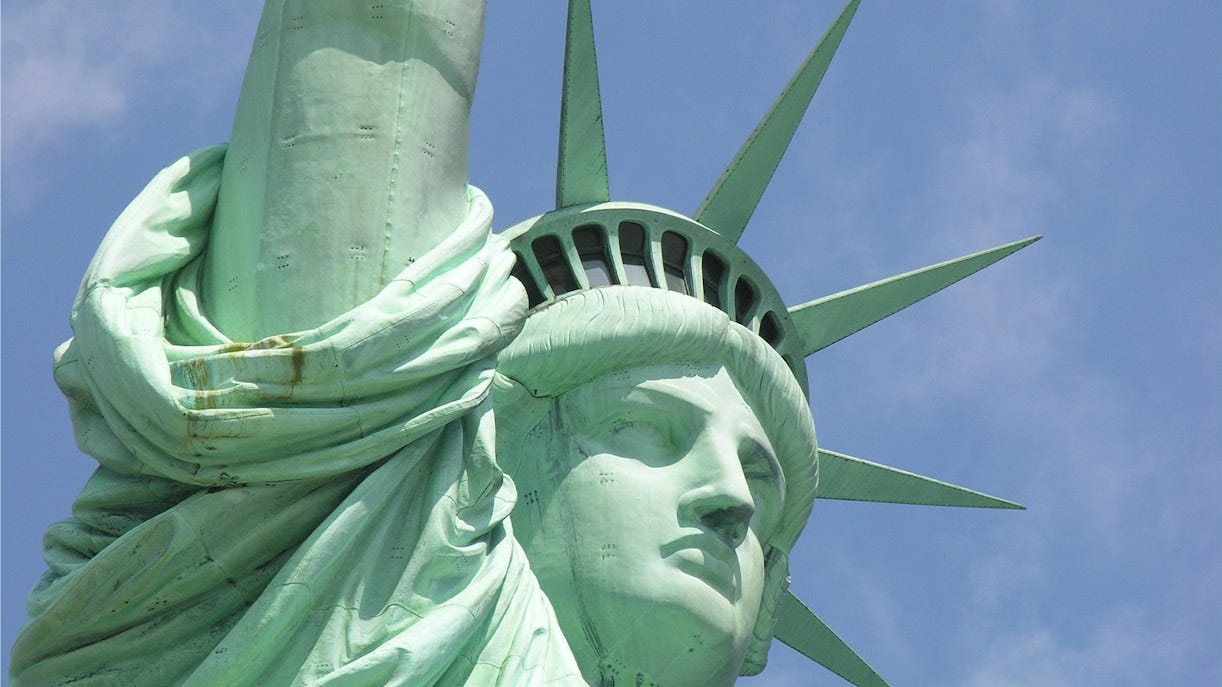
The first two show the Statue of Liberty crown with its seven rays/spikes.
The next captures the broken chains at her feet—a symbol of liberty and freedom from bondage.
The last images are specimens of the Sol Invictus iconography on Roman coins, featuring the radiate crown and solar motifs.
Lucifer portrait
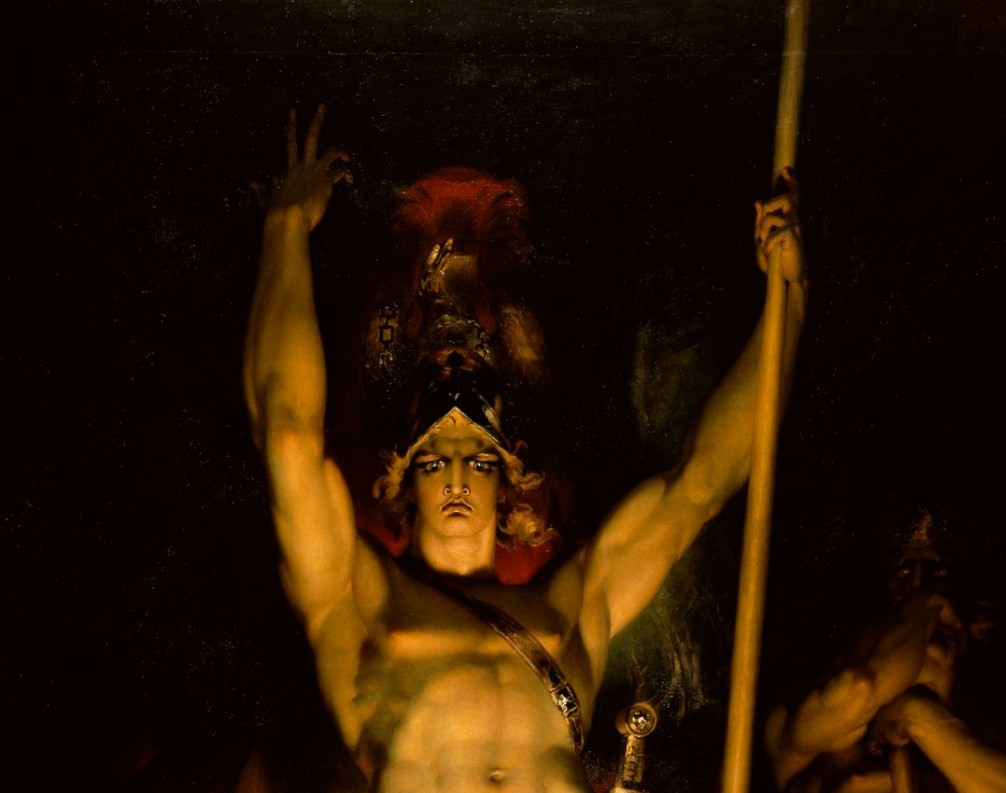
Yes — here are some images of the artwork often called the “1797 Lucifer portrait” (official title: Satan Summoning His Legions by Sir Thomas Lawrence, circa 1797). That mug face and those muscular arms look eerily similar to Lady Liberty?
Quick Notes
The drawing or painting shows a powerful angelic/figure with arms raised, somewhat stylised and dramatic in pose.
The year 1797 is often cited for the piece.
This image has been used in various contexts to symbolise rebellion, the fallen angel, or “Lucifer” as a figure of light-bearer turned adversary.
“‘Satan Summoning His Legions’, Sir Thomas Lawrence, c. 1797 (commonly used as ‘Lucifer portrait’)” This is symbolic art, not a direct biblical depiction.
The Tablet Held By The Statue of Liberty:
Here is an overview of votive tablets and votive offerings in the context of ancient Ancient Rome, their religious function, forms, and significance.
What We Know: Votive Tablets / Votive Offerings
Definition and Religious Role
In Roman religion, a votum (plural vota) was a vow or promise made to a deity: “I give so that you may give” (Latin do ut des). Wikipedia+2Roman Mythology+2
When the promise was fulfilled, the worshiper would make a dedicated offering, which could include a physical object (statue, plaque, tablet, figurine), inscription or other form — that would stand as the fulfillment of the vow. Wikipedia+1
Votive tablets would often record the vow and dedication: e.g., an inscription “V.S.L.M.” (votum solvit libens merito — “He fulfilled his vow willingly and deservedly”). Wikipedia+1
These practices reflected the contractual nature of Roman religious practice: humans make a pledge, the deity is asked for a favour (health, victory, safe voyage), and if granted, the worshiper gives back something. Fiveable+1
Typical Forms of Votive Offerings
Objects that represent afflicted body parts, sculpted in terracotta, bronze, etc., offered at healing sanctuaries — e.g., a clay/bronze hand, foot, or internal organ model left to the divinity as a plea or thanksgiving. The Votives Project+2OpenEdition Journals+2
Inscribed metal plates or tablets (sometimes small) that record the vow, the name of the deity, the person dedicating, and the reason. For example, the practice of curse-tablets (defixiones) overlapped with votive deposit behaviour. sarahveale.com
Miniature tools, weapons, household items, or objects of daily life dedicated as offerings, especially if the person sought divine favour in that area. Roman Mythology+1
Larger scale dedications such as statues, altars, temples constituted also vota publica (public vows) by communities, magistrates, generals, etc. Wikipedia+1
Placement and Ritual Context
Many votive offerings were placed in temples, sanctuary precincts, dedicated areas around the cult image of the deity, or buried in special storage pits (favissae) when no longer on display. Wikipedia+1
The ritual act was not just the object, but also the vow, the offering and sometimes the breaking or termination of the object so it enters divine possession (no longer human use). Some offerings indeed were “killed” or mutilated to signal that they belonged to the gods. reddit.com+1
The offering affirmed the worshiper’s dependence on the deity and often reinforced social or communal bonds, as well as the legitimacy of the cult and its priests. Roman Mythology
Significance
Votive tablets and offerings show how religion in ancient Rome was integrated deeply into daily life: health, work, travel, war, family. It was not merely public ceremony but private devotion. wellcomecollection.org+1
They provide archaeologists and scholars insight into the personal faith, health issues, social status and the “economy” of religious giving in antiquity. OpenEdition Journals+1
They illustrate how material culture (objects) and ritual acted as a bridge between the human and divine spheres with the human making tangible their request or gratitude.
Considerations
While “votive tablets” per se are one form, the category of votive object is very broad; in Roman terms, the literature tends to emphasise votum (vow) and votiva dona (votive gifts) rather than exclusively “tablets.”
The term “tablet” might mislead: many offerings were figurines, plaques, altars, inscribed dedications but not always flat tablets.
Because religion in Rome was contractual and transactional in nature, the emphasis is on correct performance of vow + offering. If the formula or ritual was incorrect, the offering might be invalid. reddit.com
For this framework (considering spiritual deception, etc.), note: these practices show how humans attempted to control or influence divine favour via material means — a principle not entirely unlike what many religious systems today do, though in very different theological categories.
What the Statue of Liberty is holding in her left hand is commonly described as a “tabula ansata,” a tablet with handles, the same style as ancient Roman votive tablets or legal proclamations. In official history, it’s said to represent the law, specifically the American Declaration of Independence, since it’s inscribed with JULY IV MDCCLXXVI (July 4, 1776).
But when you look deeper at the symbolic origins, that same style of tablet has strong pagan and imperial roots:
Roman Origin – Tabula Ansata
The tabula ansata was a Roman ceremonial tablet used for dedications, decrees, and votive offerings to the gods.
“Ansata” means “with handles,” and these tablets often carried inscriptions honoring gods like Jupiter, Sol Invictus, or Isis.
Archaeologists have found these tablets in temples, inscribed with vows or fulfilled promises, the same concept as votum solvit libens merito (“He paid his vow gladly and deservedly”).
So, the Statue of Liberty’s tablet directly mimics the Roman votive form, not just a modern “book of law.”
Connection to Solar Deities and Enlightenment
The rays on her crown represent the seven rays of the sun, symbolizing enlightenment and the spread of illumination, just like Sol Invictus, the Roman “Unconquered Sun.”
In pagan Rome, light symbolized divine knowledge or power, while in Christian terms, Jesus said, “I am the light of the world” (John 8:12). The counterfeit “light-bringer” …. Lucifer …. is associated with false illumination.
The combination of sun rays and a votive tablet forms a striking resemblance to a modernized goddess of reason or liberty, similar to Ishtar, Semiramis, or Libertas, who were all linked to freedom through rebellion rather than righteousness.
Chains, Fire, and False Freedom
At her feet are broken chains, symbolizing liberty, but that could also reflect the release of the bound one, as in Satan being loosed from the pit (Revelation 20:7) during his little season.
The imagery of a radiant figure holding a votive tablet and standing above broken chains can be read as a mock resurrection of the pagan light-bearer, a symbol of rebellion disguised as freedom.
The Enlightenment “Goddess” Reborn
The Statue of Liberty was modeled after Libertas, the Roman goddess of freedom, who was often shown with a torch and tablet.
French Freemasons, including Frédéric Auguste Bartholdi (the sculptor) and Édouard Laboulaye (who conceived the idea), were influenced by Enlightenment ideals and Freemasonry’s “light of reason”, which replaced divine revelation with human intellect.
The statue’s symbolism, then, merges Roman votive iconography, solar divinity, and Masonic enlightenment, which is the same spiritual blend found in pagan Rome before Christianity.
When she holds that “tablet,” it’s not just a random prop but it’s an ancient Roman votive tablet, once used to make declarations of devotion or offerings to gods.
Only this time, the “god” being honored isn’t the Creator, but the human ideal of liberty or freedom without God.
Mesopotamian / Babylonian Roots
Votive offerings were small clay or metal plaques, figurines, and body-part effigies which did originate in Sumer and Babylon as early as the 3rd millennium BC.
They were usually left in temples as “gifts” to a god after healing, or as petitions for healing or protection.
Some tablets do have lugs or handles, which may have served to hang them, carry them, or fix them to temple walls or cult statues. Nothing in the texts describes them as literal trays for flesh, though animal or human sacrifice sometimes occurred alongside such offerings.
The logic behind them….“a small image representing my body part, (or a real body part), before the god”…. is very Babylonian: a transactional ritual act meant to secure divine favor.
Greek and Roman Continuation
The practice spread westward. At sanctuaries of Asclepius and other healing gods, people left bronze or terracotta models of eyes, limbs, or organs.
Latin inscriptions often read votum solvit libens merito (“He fulfilled his vow willingly and deservedly”), giving us the word votive.
These tablets or figurines could be flat like plaques, or 3-D like trays and dishes, but the idea remained symbolic rather than literal sacrifice.
Possible Mesoamerican Parallels
In Aztec and Maya temples, archaeologists have found small clay or stone effigies of body parts and miniatures of tools, crops, or animals offered to the gods.
They served a similar ritual function: to represent the offerer’s request or gratitude.
There’s no archaeological link proving direct transmission from Babylon to Mesoamerica, but the pattern, representing oneself or one’s need through a small object, appears across many civilizations.
In Aztec rituals, actual blood and hearts were presented on stone trays or cuauhxicalli bowls; those are the closest visual echo to the “tray idea,” though made of volcanic stone, not clay tablets with handles.
Symbolic Continuity
It’s reasonable to see the motif—offering a piece or image of oneself to a god—as an ancient, global spiritual technology.
Babylon refined it in written form; Greece and Rome formalized it with artistic skill; the Aztecs embodied it with literal sacrifice.
The outward forms differ, but inner theology is the same: trying to manipulate divine power through representation and exchange.
Comparing the Declaration of Independence to the Word of God, especially in light of Satan’s little season and mankind’s recurring desire for “freedom” apart from the authority of Christ.
Declaration of Independence vs. The Bible
Source of Authority
Declaration: Begins, “We hold these truths to be self-evident…” — that is, truth based on human reason and consensus.
Bible: Begins, “In the beginning God created…” — truth based on divine revelation and authority.
“The fear of the Lord is the beginning of wisdom.” — Proverbs 9:10
Human “self-evident” truth denies that fear and it replaces revelation with reason. The Declaration sets man as judge of what is right and wrong, echoing “You shall be as gods, knowing good and evil.” (Genesis 3:5)
Liberty Defined
Declaration: Liberty means freedom from earthly rulers or self-governance.
Bible: Liberty means freedom from sin and death or submission to Christ.
“If the Son therefore shall make you free, ye shall be free indeed.” — John 8:36
True liberty is spiritual, not political. The founders sought liberty from a king on earth, but ignored the King of kings in Heaven. The Bible says liberty comes by obedience, not rebellion. (Romans 6:18)
Creator vs. Christ
Declaration: Mentions “Nature’s God” and a generic “Creator.”
Bible: Declares Jesus Christ as the Creator.
“By Him were all things created, that are in heaven, and that are in earth.” — Colossians 1:16
The “Creator” of the Declaration is not the God of the Bible …. it’s the Enlightenment’s “Deist God,” detached from the affairs of men. In practice, this substitutes the light of reason (Lucifer’s light) for the light of Christ.
Right to Life, Liberty, and Pursuit of Happiness
Declaration: Man’s goal is personal fulfillment and happiness.
Bible: Man’s goal is to glorify God and serve others.
“Deny yourself, take up your cross, and follow Me.” — Matthew 16:24
The pursuit of happiness, detached from holiness, leads to idolatry — pleasure becomes the god. This secular “liberty” mirrors the lie of Eden: “You will not surely die.”
Human Government vs. Divine Kingdom
Declaration: Establishes the right of men to overthrow authority and form new governments.
Bible: Commands submission to God’s established order, unless it directly opposes Him.
“There is no power but of God: the powers that be are ordained of God.” — Romans 13:1
Rebellion, even in the name of freedom, often hides pride. The American Revolution, spiritually, could be seen as mankind again declaring independence — not just from a king, but from The King.
Eternal Foundation
Declaration: Founded on mutable human reasoning — “We hold…”
Bible: Founded on eternal truth — “Thy word is truth.” (John 17:17)
The Declaration promises liberty through law and self-rule. The Bible promises liberty through grace and submission. One is fleshly and temporary; the other is spiritual and eternal.
Summary Thought
The Declaration of Independence was a document of man’s second rebellion …. a beautiful-sounding appeal to heaven, yet crafted in the same spirit that once said, “Let us make us a name.” (Genesis 11:4).
The Bible calls us not to independence, but to dependence on Christ.
The nation’s founding words, “self-evident truths,” might as well have said, “we will decide truth for ourselves.” That is the core of all deception and the essence of Satan’s little season.